


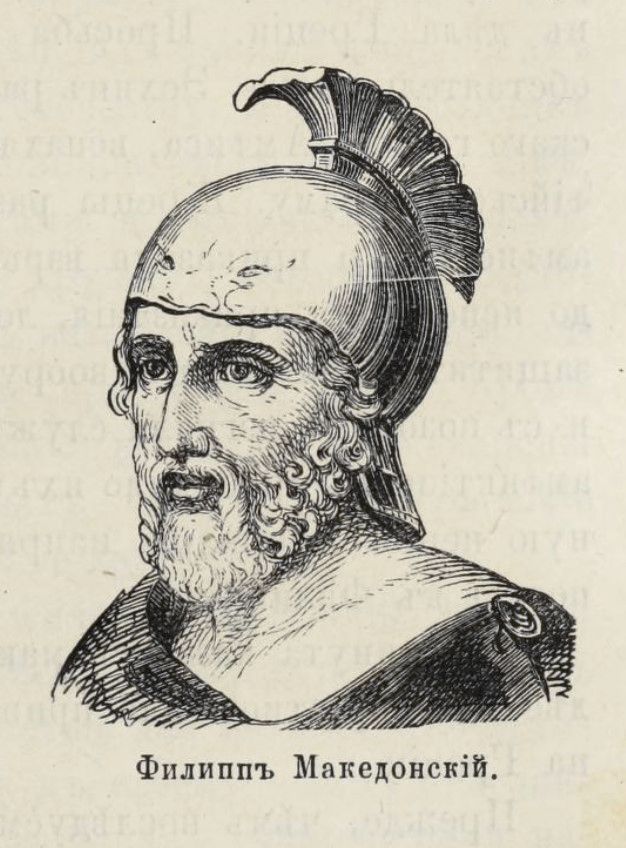
 Philip II of Macedon was a pivotal figure in ancient history, reigning as king from 359 BC until his assassination in 336 BC. A member of the Argead dynasty and the father of Alexander the Great, Philip II's reign marked a transformative period for Macedon, which evolved from a fragmented kingdom into a dominant power in the Greek world.
Early Life and Ascendancy
Born around 382 BC in Pella, Philip II was the youngest son of King Amyntas III and Queen Eurydice I. His early years were indeed marked by significant events that shaped his future reign. After the assassination of his elder brother, Alexander II, Philip was sent as a hostage to Thebes around 368 BC. During his time in Thebes, he was exposed to Greek military tactics and culture, particularly under the influence of the Theban general Epaminondas. This experience provided him with valuable insights into military strategy and diplomacy.
Upon his return to Macedon in 364 BC, Philip faced a kingdom in turmoil. His elder brother, Perdiccas III, had ascended to the throne but was killed in battle against the Illyrians in 359 BC. With the kingdom on the brink of collapse and facing threats from neighboring tribes and internal strife, Philip seized the opportunity to take the throne. He initially served as regent for his infant nephew, Amyntas IV, but soon consolidated power and became king himself.
Philip's reign marked a period of significant transformation for Macedon. He reformed the Macedonian army, introducing the phalanx formation and incorporating the use of siege engines. His military innovations and strategic alliances allowed him to expand Macedonian territory and secure dominance over Greece. One of his most notable achievements was the establishment of the League of Corinth in 338 BC, which united the Greek city-states under his leadership for a planned invasion of the Persian Empire.
Philip's reign came to an abrupt end in 336 BC when he was assassinated by one of his bodyguards, Pausanias of Orestis. His legacy, however, lived on through his son, Alexander the Great, who continued his father's ambitions and expanded the Macedonian Empire to unprecedented heights.
Military Reforms and Innovations
Philip II of Macedon fundamentally transformed the Macedonian military through a series of comprehensive reforms that revolutionized warfare in ancient Greece. His most notable contribution was the introduction of the Macedonian phalanx, a formidable and innovative infantry formation that became the backbone of the Macedonian army. This phalanx was characterized by tightly-knit units of soldiers, known as phalangites, who were equipped with long spears called sarissas. These spears, measuring approximately 18 to 22 feet in length, allowed the phalanx to present a bristling wall of spear points to their adversaries, making it difficult for enemy forces to penetrate their lines.
Philip's military reforms extended beyond the introduction of the phalanx. He emphasized rigorous training and discipline, ensuring that his soldiers were well-prepared and capable of executing complex maneuvers on the battlefield. Philip also introduced standardized equipment for his troops, which included not only the sarissas but also lightweight armor and shields, enabling greater mobility and endurance during campaigns.
In addition to the infantry, Philip reorganized the cavalry, creating the Companion Cavalry (Hetairoi), an elite force of horsemen who served as both a shock troop and a highly mobile unit capable of flanking and pursuing enemy forces. The integration of the phalanx and the Companion Cavalry allowed Philip to employ combined arms tactics, coordinating the movements of infantry and cavalry to devastating effect.
Philip's reforms extended to logistical and strategic innovations as well. He established supply lines and depots to support his troops during extended campaigns, and he developed fortified bases and strongholds to secure newly conquered territories. His strategic acumen enabled him to outmaneuver and outflank larger and better-equipped adversaries, ultimately securing Macedonian dominance over Greece.
The success of Philip's military reforms not only secured his reign but also laid the foundation for the future conquests of his son, Alexander the Great. The formidable Macedonian army, with its innovative phalanx and disciplined troops, became the instrument through which Alexander would go on to create one of the largest empires in history.
Diplomatic Acumen and Alliances
Philip II of Macedon was indeed a masterful diplomat and strategist. He leveraged his political acumen to forge alliances and secure his kingdom's stability through a series of strategic marriages and astute diplomacy.
Philip's multiple marriages were key components of his diplomatic strategy. He married several women from influential families and neighboring regions to strengthen his political network and secure loyalty from various factions. These marriages served as alliances, creating bonds with other powerful families and tribes, which in turn bolstered his position and influence within the region.
One of Philip's most significant marriages was to Olympias, a princess of Epirus and the mother of Alexander the Great. This union solidified his influence and created a powerful alliance with the Molossian royal family. Olympias, who was known for her intelligence and strong personality, played a crucial role in the upbringing of Alexander and ensured his succession to the throne.
Philip's diplomatic efforts extended beyond marital alliances. He skillfully negotiated treaties and formed coalitions with neighboring states, often using diplomacy to neutralize potential threats or to secure strategic advantages. For example, he formed alliances with the Thessalians and the Thracians, which helped him secure key territories and resources.
Furthermore, Philip's diplomatic prowess was evident in his handling of internal affairs. He managed to quell internal dissent and consolidate his power by co-opting rival factions and rewarding loyalty with positions of influence and authority. This ability to navigate the complex political landscape of Macedon ensured the stability and unity of his kingdom during his reign.
Overall, Philip II's combination of military brilliance and diplomatic shrewdness laid the foundation for the future expansion of the Macedonian Empire under his son, Alexander the Great. His strategic marriages and alliances not only secured his position but also created a network of support that would prove crucial for the empire's continued success.
Conquest and Expansion
Philip II's reign was marked by significant territorial expansion and consolidation of power, transforming Macedon from a relatively minor kingdom into a dominant force in the Greek world. Through a series of military campaigns, Philip subdued neighboring regions and secured Macedon's borders, enhancing its standing and influence.
One of Philip's early military successes was against the Illyrians. In 358 BC, he defeated the Illyrian king Bardylis, who had previously inflicted heavy losses on Macedon. This victory not only secured Macedon's western borders but also demonstrated Philip's military prowess and strategic acumen.
Philip also turned his attention to the Thracians, who posed a threat to Macedon's eastern borders. Through a series of campaigns from 356 to 340 BC, Philip managed to subjugate the Thracian ruler Kersebleptes and conquer much of Thrace. He established new cities, such as Philippi and Philippopolis, to secure his control over the region and to facilitate further expansion.
In addition to these conquests, Philip skillfully used diplomacy and strategic marriages to forge alliances and consolidate his power. His marriage to Olympias, a princess of Epirus, was one such strategic union that strengthened his political network and secured loyalty from various factions.
The decisive moment in Philip's reign came with the Battle of Chaeronea in 338 BC. This battle saw Philip's forces, including his son Alexander, defeat the combined armies of Athens and Thebes. The victory at Chaeronea was a turning point, establishing Macedon's dominance over Greece and effectively ending the era of independent Greek city-states.
Following the battle, Philip established the League of Corinth, a federation of Greek states that recognized Macedonian hegemony and united them under his leadership for a planned invasion of the Persian Empire. This alliance not only solidified Philip's control over Greece but also laid the groundwork for the future conquests of his son, Alexander the Great.
Philip's reign was characterized by a combination of military brilliance, diplomatic shrewdness, and strategic vision, which transformed Macedon into a powerful and influential kingdom in the ancient world.
The League of Corinth
Following his decisive victory at the Battle of Chaeronea in 338 BC, Philip II of Macedon established the League of Corinth, also known as the Hellenic Leage. This federation of Greek states was created with the primary aim of uniting Greece against the Persian Empire. Philip assumed the role of hegemon, or leader, of the League, which allowed him to coordinate the military efforts of the member states.
The League of Corinth was a significant diplomatic achievement, as it promoted cooperation among the Greek city-states while allowing them to maintain a degree of autonomy. Each member state elected delegates to a council, known as the Synedrion, which decided on matters of federal government, including foreign policy and military strategy. This structure ensured that the Greek states could work together towards common goals without losing their individual identities.
Philip's initiative not only secured his leadership over Greece but also laid the groundwork for the future campaigns of his son, Alexander the Great. The League provided a unified front against the Persian Empire, and its establishment marked the first time in history that the Greek city-states were united under a single political entity. This unity was crucial for the success of Alexander's subsequent conquests, as it allowed him to draw on the combined resources and military strength of the Greek states.
The League of Corinth also had a lasting impact on the political landscape of Greece. Although it disbanded after Alexander's death in 323 BC, it was briefly revived by later Macedonian rulers. The League's creation and its role in uniting Greece against a common enemy remain significant achievements of Philip II's reign.
Assassination and Legacy
Philip's assassination in 336 BC during the wedding of his daughter Cleopatra to Alexander of Epirus marked a sudden and dramatic end to his transformative reign. The assassin, Pausanias of Orestis, was one of Philip's bodyguards, and his motives remain a subject of historical debate, with various theories suggesting personal vendettas or political conspiracies. Regardless of the reasons, Philip's death left Macedon in a state of uncertainty, but his legacy was firmly established and would be carried forward by his son, Alexander the Great.
Philip II's reign had a lasting impact on the ancient world through his numerous reforms and strategies. His contributions to military tactics revolutionized warfare. The Macedonian phalanx, with its long sarissas and disciplined formation, became a dominant force on the battlefield, enabling Macedon to conquer and control vast territories. His military innovations laid the foundation for the future successes of his son, Alexander, who would go on to create one of the largest empires in history.
In addition to his military prowess, Philip was a master diplomat. He skillfully used marriage alliances, treaties, and negotiations to secure his position and expand his influence. His marriage to Olympias, a princess of Epirus and the mother of Alexander the Great, was one such strategic union that strengthened his political network and secured loyalty from various factions. Through the establishment of the League of Corinth, Philip united the Greek city-states under his leadership, promoting cooperation and preparing them for a collective campaign against the Persian Empire.
Philip's territorial expansion and consolidation of power transformed Macedon from a relatively minor kingdom into a dominant force in the Greek world. His victories over the Illyrians, Thracians, and other adversaries secured Macedon's borders and enhanced its standing. The decisive Battle of Chaeronea in 338 BC, where Philip's forces defeated the combined armies of Athens and Thebes, established Macedon's dominance over Greece and marked the end of the era of independent Greek city-states.
Despite his untimely death, Philip's legacy endured through his son, Alexander the Great, who inherited a powerful and unified kingdom. Alexander built upon his father's accomplishments, using the reformed Macedonian army and the alliances forged by Philip to embark on a campaign of conquest that would change the course of history.
Philip II of Macedon was a visionary leader whose reforms and strategies reshaped the ancient world. His contributions to military tactics, diplomacy, and territorial expansion established a legacy that influenced not only his contemporaries but also future generations. As the architect of Macedon's rise to power, Philip II's impact on history remains profound and enduring.